español




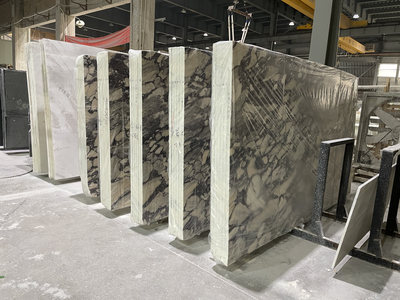
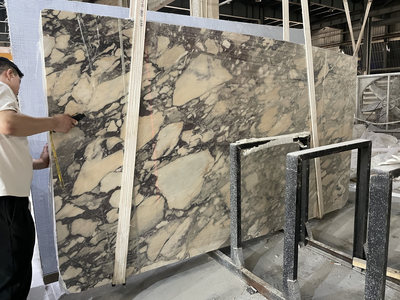
Recientemente completamos un proyecto de Calacatta Viola en contenedor completo para un nuevo cliente en Florida, EE. UU. El mármol estaba destinado principalmente a un programa a largo plazo de mobiliario y baños.
Desde el principio, el requisito del cliente era claro: quería un proveedor confiable que pudiera proporcionar un hermoso Calacatta Viola italiano con un color y un movimiento de vetas relativamente consistentes. Al mismo tiempo, el proyecto tenía un presupuesto fijo para el material.
Esa combinación hizo que el trabajo fuera más difícil.
Para un material como el Calacatta Viola, encontrar un bloque impresionante no es especialmente difícil. Encontrar un grupo de bloques que tengan una buena combinación entre sí, funcionen bien para la fabricación y además se mantengan dentro del presupuesto es un trabajo completamente diferente.
Queríamos un resultado perfecto, pero también teníamos que respetar los números del cliente.
Diferentes orígenes de Calacatta Viola pueden producir efectos visuales muy distintos, e incluso dentro de la misma fuente, encontrar el equilibrio adecuado entre fondo cremoso, brecha burdeos, movimiento de vetas y precio requiere una selección cuidadosa. Explicamos esto con más detalle en Cómo elegir mármol Calacatta Viola para un proyecto B2B .
Para este proyecto, nuestra ventaja era simple pero importante: teníamos suficientes bloques de Calacatta Viola disponibles para elegir.
Más existencias significaban que no teníamos que convencer al cliente de aceptar lo que estuviera disponible. Podíamos comparar diferentes bloques, eliminar las opciones más débiles y seguir buscando hasta que el color, el patrón, el área utilizable y el precio encajaran.
Tomamos este tipo de selección con mucha seriedad porque la mayoría de los errores costosos ocurren antes de que el bloque llegue a la sierra.
Al inicio del proyecto, organizamos una reunión por videollamada cara a cara con el cliente. Una conversación breve fue mucho más útil que otro largo intercambio de fotos y mensajes.
Durante la reunión, descubrimos que el cliente era muy exigente con el fondo blanco cremoso, la cantidad de brecha rojo vino y púrpura, y cuánta variación sería aceptable entre diferentes tablas.
Por eso no empezamos a enviar bloques de inmediato.
Primero, convertimos esas preferencias en un PPT visual sencillo. Mostraba lo que considerábamos aceptable, lo que debía evitarse y qué tipos de Calacatta Viola debían recibir prioridad.
Eso se convirtió en nuestro estándar de trabajo para el proyecto.
Nuestra página de colores de Calacatta Viola registra varias de las apariencias de Calacatta Viola más representativas que hemos manejado a lo largo de los años. Esta experiencia visual nos ayudó a comunicarnos mucho más rápido porque ya teníamos referencias claras para diferentes direcciones de color y vetas.
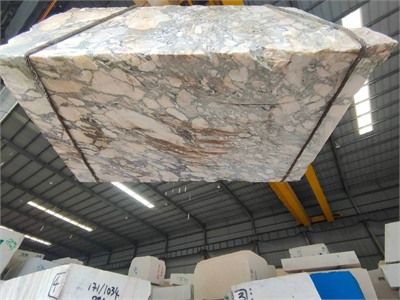
Después de confirmar el estándar, nuestro equipo revisó el inventario disponible y preseleccionó más de una docena de bloques.
Esta es una parte del trabajo en la que tenemos bastante confianza. Nuestro especialista en abastecimiento de mármol cuenta con alrededor de 20 años de experiencia en compra de piedra.
Por supuesto, nadie puede ver perfectamente el interior de un bloque de mármol natural. Pero a partir de las caras expuestas, la dirección de las vetas, las fisuras, la estructura del bloque y la experiencia previa de corte, un comprador experimentado puede hacer una valoración mucho mejor sobre cómo es probable que se abra el bloque.
No simplemente enviamos al cliente una carpeta de fotos de bloques y dijimos: “Por favor, elija”.
Para cada candidato, compartimos nuestra evaluación y, lo más importante, clasificamos los bloques según el orden que recomendamos.
La elección final siempre fue del cliente, pero queríamos que tuviera nuestra opinión profesional antes de tomar esa decisión. Si pensábamos que el Bloque A era más seguro que el Bloque B, o que el Bloque C tenía un mejor potencial para la producción de muebles, lo indicábamos directamente.
Para nosotros, eso forma parte de ser un proveedor confiable.
Una vez aprobados los bloques, el siguiente trabajo era proteger el valor que ya estaba dentro de ellos.
El Calacatta Viola no es un material barato, y cada buena tabla importa.
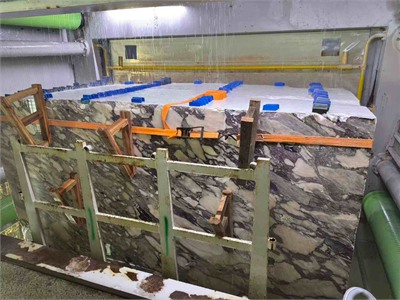
Para este proyecto, utilizamos nuestra avanzada sierra de hilo diamantado para reducir el ancho de corte y minimizar la pérdida innecesaria de mármol durante la producción de tablas. Un corte más estrecho permite que una mayor parte del bloque original se convierta en área utilizable de tabla en lugar de residuos de piedra.
Para un mármol costoso, incluso una o dos tablas buenas adicionales pueden marcar una diferencia significativa en el rendimiento final de un bloque. Un mejor rendimiento ayuda a reducir el costo efectivo del material por metro cuadrado y proporciona al cliente más material utilizable de la misma compra.
Había otra razón por la que preferimos el corte con hilo para este proyecto.
Como se elimina menos piedra entre cortes consecutivos, se conserva más de la secuencia original dentro del bloque. Esto es útil cuando posteriormente las tablas se considerarán para combinaciones, piezas de mobiliario, encimeras de tocador u otros diseños coordinados.
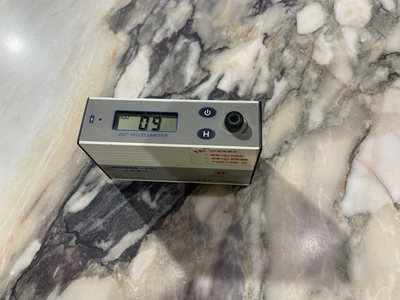
La precisión de corte estable también nos ayudó a controlar el grosor de las tablas y reducir pérdidas innecesarias durante la calibración y el acabado posteriores.
Pero la máquina en sí era solo la mitad del trabajo.
Antes de cortar cada bloque, también consideramos su orientación de corte.
Calacatta Viola puede abrirse de formas muy diferentes dependiendo de cómo se coloque el bloque en la sierra. Cambiar la dirección de corte cambia el equilibrio entre el espacio blanco, la brecha burdeos y el movimiento general de las vetas.
Basándonos en la estructura visible y en los productos que el cliente pretendía fabricar, seleccionamos la orientación que creíamos que ofrecería la mejor apariencia de la losa y el mayor rendimiento utilizable.
Siempre que fue posible, también intentamos colocar las áreas menos deseables más cerca de los bordes de la losa o de las futuras zonas de recorte: áreas que tenían más probabilidades de eliminarse posteriormente cuando las losas se fabricaran en componentes de muebles, encimeras de baño u otras piezas cortadas a medida.
La piedra natural siempre tendrá incertidumbre natural. No podemos hacer desaparecer todas las fisuras.
Lo que podemos hacer es utilizar nuestra experiencia para colocar esas áreas en una mejor posición antes del corte, en lugar de descubrir el problema después de que todas las losas estén terminadas.
Para un material costoso como Calacatta Viola, eso puede marcar una diferencia real en la cantidad de cada losa que finalmente se convierte en una pieza terminada utilizable.
Una razón por la que este proyecto se desarrolló sin problemas es que nuestra experiencia va más allá de suministrar bloques y losas de Calacatta Viola.
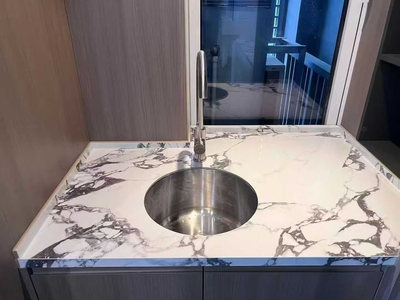
También fabricamos nosotros mismos muebles de Calacatta Viola, encimeras, cubiertas de tocador y otros productos cortados a medida.
Eso cambia la forma en que seleccionamos la piedra.
Cuando estamos frente a un bloque, ya estamos pensando en lo que puede convertirse después del corte. Consideramos si la dirección de las vetas funcionará para una mesa, si las losas consecutivas pueden utilizarse juntas, dónde pueden caer las fisuras después de la fabricación y qué dirección de corte puede dejar disponibles más áreas valiosas para piezas terminadas.
Por eso creemos que podemos ofrecer una solución de compra más completa para los clientes que también trabajan en fabricación de muebles y piedra. Puedes ver algunos ejemplos en nuestra Muebles de Calacatta Viola introducción.
Para este cliente de Florida, no intentábamos simplemente enviar un contenedor de mármol atractivo.
Queríamos ayudarle a comprar los bloques adecuados, aprovechar más de lo que había pagado, mantener bajo control la apariencia general del material y reducir las sorpresas durante la fabricación posterior.
Ese es el estándar que aportamos a este proyecto: una selección estricta antes del corte, asesoramiento profesional cuando había que tomar decisiones y un procesamiento cuidadoso una vez que los bloques entraban en producción.
El cliente quedó satisfecho con el resultado y, para un primer pedido, ese fue el resultado más importante para nosotros.
 ROOM 205,NO.45, MIDDLE HAIJING ROAD,XIAMEN,AREA OF PILOT FREE TRADE ZONE(FUJIAN)OF CHINA
Para Consultas sobre nuestros productos o su lista de precios, por favor, déjanos a nosotros y estaremos en contacto dentro de las 24 horas.



© Derechos de autor: 2026 XIAMEN EXCELLENT STONE CO.,LTD. Reservados todos los derechos.

Red IPv6 admitida