español




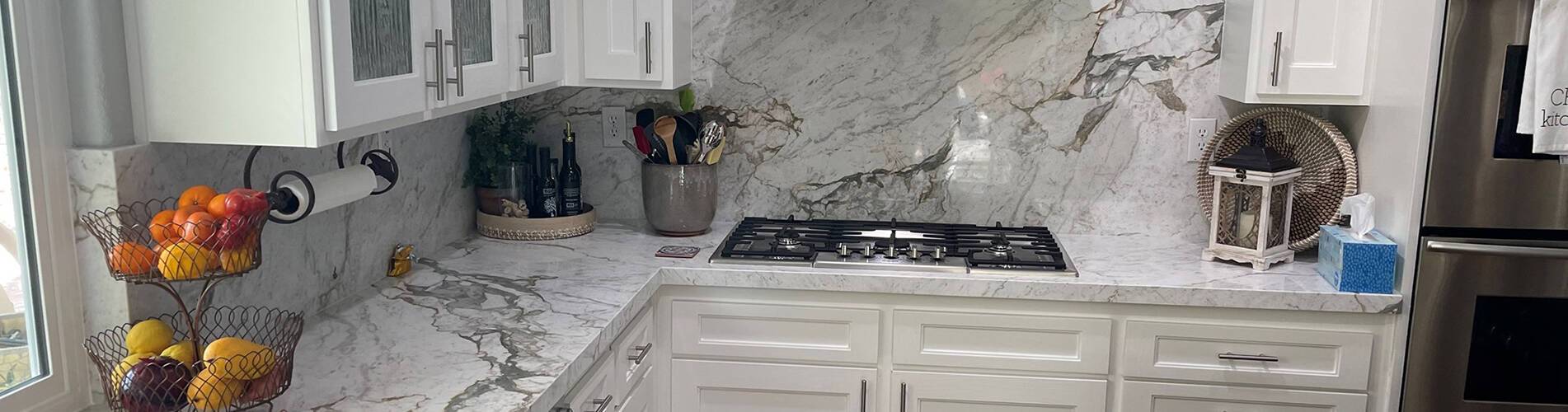
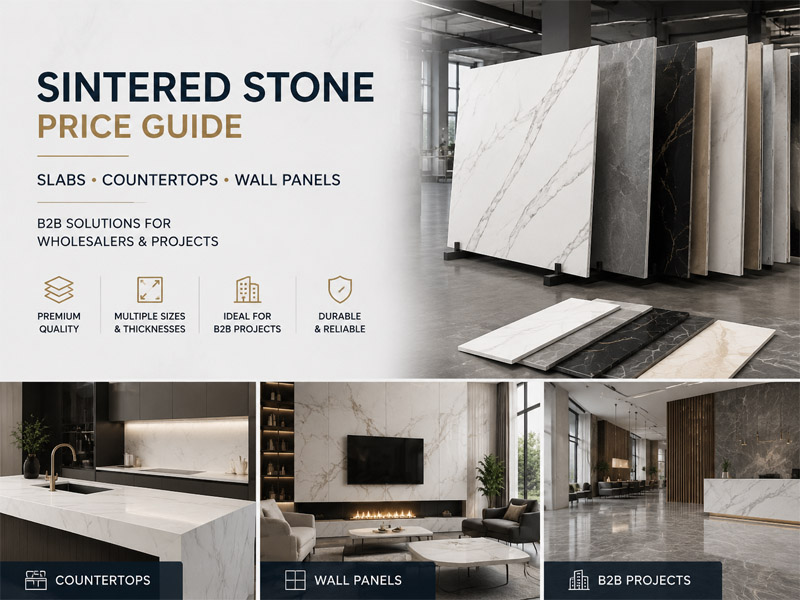
Se exhiben para compradores B2B losas de piedra sinterizada, muestras de encimeras y aplicaciones de paneles de pared.
El precio de la piedra sinterizada se ve afectado por diversas variables del proyecto. Los factores más comunes incluyen el tamaño de la losa, el grosor, el acabado superficial, el color, el patrón, la estructura (de cuerpo completo o regular), la aplicación, la dificultad de fabricación, el embalaje, la logística, la cantidad, el posicionamiento de la marca y el nivel del proveedor.
Por ejemplo, un panel de pared de 6 mm y una encimera de 20 mm pueden denominarse piedra sinterizada, pero su estructura de costes es muy diferente. Un simple panel de pared puede requerir únicamente corte y embalaje estándar, mientras que una isla de cocina puede necesitar recortes para el fregadero, pulido de bordes, cantos a inglete y un manejo más intensivo.
Para una explicación básica del material, lea nuestra guía sobre ¿Qué es la piedra sinterizada? .
El grosor influye directamente en el precio, pero el grosor más económico no siempre es la opción más barata para todo el proyecto. Una selección incorrecta del grosor puede generar mayores costos posteriores debido a roturas, mala instalación, reemplazos o riesgos para la seguridad.
| Espesor | Nivel de costo | Aplicaciones adecuadas | Nota de compra |
|---|---|---|---|
| 3-6 mm | Más bajo | Paneles de pared, revestimiento de armarios, superposición de renovación | Resulta rentable únicamente cuando la calidad del proveedor, el respaldo y el embalaje son fiables. |
| 9 mm | Medio | Suelos, revestimiento de paredes, interiores comerciales | Mejor equilibrio entre fuerza y peso. |
| 12 mm | Medio-alto | Encimeras, islas, encimeras de tocador, tableros de mesa | Común para superficies de trabajo funcionales |
| 15-20 mm | De primera calidad | Barras, mostradores de alta resistencia, mesas comerciales, escaleras | Mayor coste, pero mayor estabilidad y presencia en los bordes. |
Las planchas de 3 a 6 mm pueden ser una opción razonable para la decoración de paredes, puertas de armarios, revestimientos de muebles y proyectos de renovación. Sin embargo, los compradores B2B deben solicitar muestras físicas y comprobar la resistencia a la flexión, el rendimiento ante impactos, las opciones de soporte y la calidad del embalaje antes de realizar una compra al por mayor.
Los compradores también deben preguntar si el proveedor tiene capacidad de producción estable para losas ultrafinas y si el rendimiento del producto terminado es fiable. Para encimeras, suelos, tableros de mesa o cualquier superficie que soporte carga, normalmente se recomienda un espesor de 9 mm o superior. Ahorrar en costes de material utilizando losas demasiado finas puede aumentar las pérdidas por corte, el riesgo de instalación y los costes de posventa.
Para conocer las opciones de grosor disponibles, compare los productos en nuestra Colección de losas de piedra sinterizada o utilice el grosor de la losa de piedra sinterizada de anclaje al vincularlo con su guía detallada de losas.
Las encimeras de piedra sinterizada suelen ser más caras que los paneles de pared sencillos, ya que requieren losas más resistentes y una fabricación más precisa. El coste aumenta cuando el proyecto incluye huecos para fregaderos, aberturas para placas de cocción, bordes biselados, islas con efecto cascada, bordes pulidos, voladizos grandes o una instalación compleja en obra.
Para la planificación de encimeras, utilice las encimeras de piedra sinterizada de anclaje al enlazar con su guía de encimeras. Para un producto de encimera con aspecto de mármol, consulte la Encimera de piedra sinterizada Dekton Calacatta Gold .
Los paneles de piedra sinterizada para paredes suelen ser más fáciles de controlar en cuanto a costes que los proyectos de encimeras complejos, sobre todo cuando se utilizan paneles de 3-6 mm o 6-9 mm. Sin embargo, los paneles de gran formato, los sistemas de instalación en seco, los soportes compuestos, los pasillos de hoteles, los interiores comerciales y los requisitos de impermeabilización pueden incrementar el coste.
Para las especificaciones de los paneles de pared, utilice los paneles de pared de piedra sinterizada Anchor al enlazar con su artículo sobre paneles de pared. Para ver una opción de producto, consulte Paneles de pared de piedra sinterizada Dekton .
El precio de las encimeras y superficies de muebles de piedra sinterizada varía según el tamaño, el grosor, el acabado de los bordes, la cantidad del lote, el embalaje y la personalización. Las mesas de tamaño estándar suelen ser más económicas, mientras que las formas personalizadas, los bordes de alta calidad o las encimeras más gruesas incrementan el coste.
Para proyectos de mobiliario y distribución, consulte Tableros de mesa de piedra sinterizada al por mayor . Una opción con aspecto de mármol como por ejemplo Tableros de mesa de piedra sinterizada Calacatta White Puede dar soporte a programas de mesas de comedor, mesas de centro y mobiliario comercial.
Aunque dos planchas tengan el mismo tamaño y grosor, sus precios pueden variar considerablemente. Esto suele deberse a la marca, la originalidad del diseño, la tecnología de la superficie, la consistencia, el rendimiento de la producción, la calidad del embalaje y el soporte del proveedor.
Las marcas europeas de alta gama como Dekton, Laminam, Neolith y Lapitec suelen tener precios más elevados debido a su reconocimiento, tecnología consolidada, diseños originales, acabados de primera calidad y homologación internacional. Si los compradores comparan superficies ultracompactas de marca con materiales alternativos, la guía sobre materiales alternativos a Dekton puede ayudarles a definir mejor su posicionamiento. Para una comparación entre marcas, consulte Dekton vs. Neolith y Lapitec.
La piedra sinterizada china abarca una amplia gama de precios, desde losas para proyectos económicos hasta superficies de alta gama para exportación. La clave no reside únicamente en el país de origen, sino en la capacidad del proveedor para garantizar una calidad de losa estable, muestras realistas, asistencia en el corte, embalaje fiable y suministro a largo plazo.
Por eso, dos losas de 12 mm con apariencia de mármol pueden tener precios muy diferentes. Un proveedor confiable de piedra sinterizada debe explicar no solo el precio de la losa, sino también las diferencias en la estructura, el acabado, el rendimiento del corte y el soporte del proyecto.
Algunos costes de la piedra sinterizada pueden pasar desapercibidos al inicio de un proyecto. Estos costes suelen aparecer durante el corte, el transporte, la instalación o el servicio posventa.
| Costo subestimado | Por qué es importante |
|---|---|
| Reducción de pérdidas | La piedra sinterizada es dura y densa, por lo que un mal corte puede aumentar el desperdicio y la rotura. |
| Control de astillamiento de bordes | Las esquinas expuestas, los bordes biselados y los laterales pulidos requieren un procesamiento especializado. |
| Recortes para fregadero y placa de cocina | Las aberturas necesitan un radio, soporte y control de corte adecuados. |
| Manejo de gran formato | Las losas jumbo reducen las juntas, pero aumentan la dificultad de embalaje, descarga e instalación. |
| Refuerzo de losa delgada | Los paneles de 3-6 mm pueden necesitar refuerzo, soporte compuesto o un embalaje más resistente. |
| Diseño de libro simétrico | La coincidencia de vetas puede generar más recortes y desperdicio de material. |
| Embalaje de exportación | El transporte a larga distancia requiere estructuras en forma de A, cajas reforzadas y protección de bordes. |
| Riesgo de instalación | Un sustrato deficiente, un adhesivo incorrecto o voladizos sin soporte pueden generar costos de reparación posteriores. |
La marca o el origen pueden afectar al precio inicial, pero estos factores específicos del proyecto suelen determinar el coste final real.
El coste suele aumentar cuando el proyecto requiere:
Estos factores no siempre hacen que un proyecto sea "demasiado caro", pero deben incluirse en el presupuesto desde el principio. Omitirlos puede hacer que el precio inicial parezca atractivo, pero aumentar el costo final posteriormente.
La piedra sinterizada suele tener un precio que oscila entre la gama media-alta y la alta, dependiendo de sus especificaciones y aplicación. Si bien puede costar más que las baldosas básicas o algunas piedras de gama de entrada, ofrece mayor resistencia al calor, baja absorción de agua, diseños de gran formato y menor mantenimiento en aplicaciones adecuadas.
| Material | Posición del precio | Nota de costo |
|---|---|---|
| Cuarzo | De medio a alto | Sistema de encimera consolidado, pero la resistencia al calor difiere. |
| Granito | Amplia gama | Piedra natural; el sellado y la selección afectan al coste. |
| Mármol | De primera calidad | Aspecto lujoso, mayor mantenimiento y necesidades de sellado. |
| Porcelana | A menudo más bajo | Adecuado para paredes y suelos, pero la fabricación de encimeras puede ser limitada. |
| Piedra sinterizada | De nivel medio-alto a premium | Mayores requisitos de procesamiento, pero amplias aplicaciones y bajo mantenimiento. |
Para comparar materiales, consulte la comparación entre piedra sinterizada y porcelana. También puede usar los enlaces "piedra sinterizada vs. cuarzo" y "piedra sinterizada vs. mármol" cuando esas páginas de comparación estén disponibles.
Para conocer las opciones de losas disponibles, visite nuestra página losas de piedra sinterizada Un proveedor fiable de piedra sinterizada debería ayudar a los compradores a encontrar el grosor, el acabado, el embalaje y la aplicación adecuados, en lugar de limitarse a ofrecer un precio unitario bajo.
El precio de la piedra sinterizada depende del grosor, el tamaño, el acabado, la aplicación, la complejidad de la fabricación, la marca, el embalaje y el soporte del proveedor. Las losas delgadas pueden reducir el costo de los paneles de pared y el revestimiento de muebles, pero una selección incorrecta del grosor puede aumentar las roturas, el riesgo de instalación y el costo de reemplazo.
Para los compradores B2B, lo más importante es comparar el costo total del proyecto, no solo el precio de la losa. Las encimeras, los muebles a medida, los paneles de gran formato y los proyectos de exportación deben cotizarse en función de los planos, el grosor, los cortes, el acabado, la cantidad y los requisitos de embalaje.
Explore nuestra colección de losas de piedra sinterizada, compare las opciones de aplicación o utilice el enlace "Solicitar un presupuesto de piedra sinterizada" para obtener un presupuesto y muestras.
La piedra sinterizada puede resultar costosa debido a sus materias primas minerales, el proceso de producción a alta temperatura, las losas de gran formato, las opciones de espesor, los acabados superficiales, los requisitos de corte y las necesidades de embalaje. El costo final también depende de la aplicación, la complejidad de la fabricación, la cantidad, el posicionamiento de la marca y la capacidad del proveedor.
Sí. Las losas delgadas de 3 a 6 mm suelen tener un menor costo de material y son adecuadas para paneles de pared, revestimientos de gabinetes y renovaciones. Las losas de 9 mm se utilizan a menudo para pisos y revestimientos de paredes. Las losas de 12 mm son comunes para encimeras y tableros de mesa, mientras que las de 15 a 20 mm se suelen elegir para mostradores de alta resistencia, barras, escaleras y proyectos con bordes visibles.
Por lo general, sí. Las encimeras de piedra sinterizada suelen requerir losas más gruesas, recortes para el fregadero, aberturas para la placa de cocción, pulido de bordes, bordes biselados y una instalación más precisa. Los paneles de pared pueden usar losas más delgadas y un procesamiento más sencillo, aunque los paneles de gran formato, la instalación en seco y las instalaciones comerciales también pueden aumentar el costo.
Por lo general, la piedra sinterizada china ofrece una gama de precios más amplia, mientras que las marcas europeas de alta gama suelen tener precios más elevados debido al prestigio de la marca, la originalidad del diseño y el reconocimiento de sus especificaciones. Sin embargo, los compradores deberían comparar muestras, la uniformidad de las losas, el rendimiento del corte, el embalaje y el servicio de atención al cliente, en lugar de basarse únicamente en el origen.
Para obtener un presupuesto preciso, proporcione la aplicación, los planos del proyecto, el tamaño, el espesor, el acabado, la cantidad, los recortes, el perfil del borde, los requisitos de embalaje y el mercado de destino. Para pedidos B2B o de exportación, también se deben discutir la confirmación de la muestra y los detalles del embalaje antes de la producción en masa.
párrafo CTAContáctanos Para obtener especificaciones de losas, muestras, información sobre precios y detalles de cotizaciones de exportación.
Categorías
Nuevo blog
Etiquetas
 ROOM 205,NO.45, MIDDLE HAIJING ROAD,XIAMEN,AREA OF PILOT FREE TRADE ZONE(FUJIAN)OF CHINA
Para Consultas sobre nuestros productos o su lista de precios, por favor, déjanos a nosotros y estaremos en contacto dentro de las 24 horas.



© Derechos de autor: 2026 XIAMEN EXCELLENT STONE CO.,LTD. Reservados todos los derechos.

Red IPv6 admitida