español




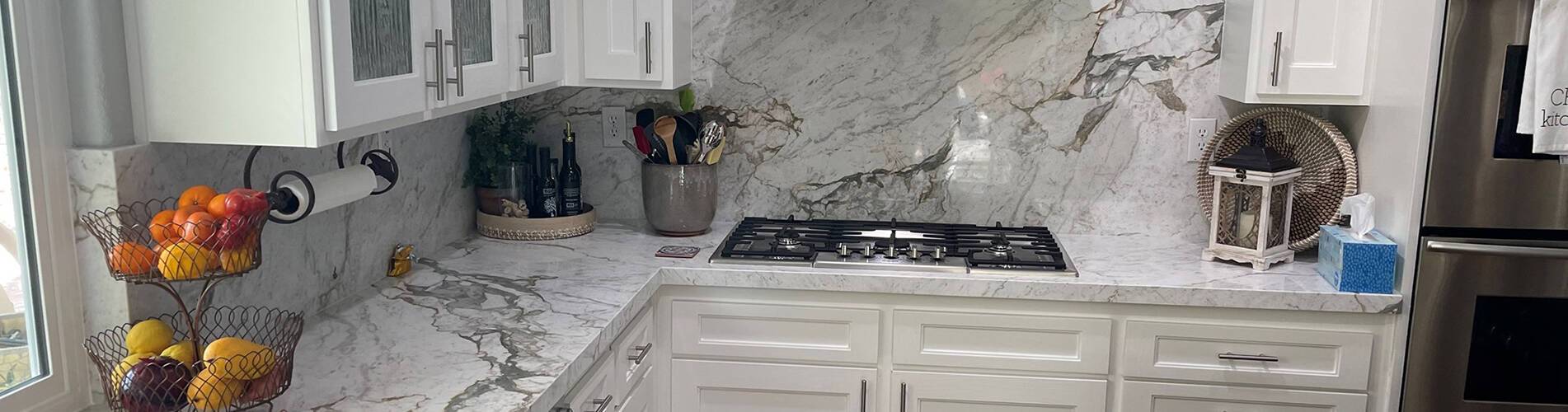
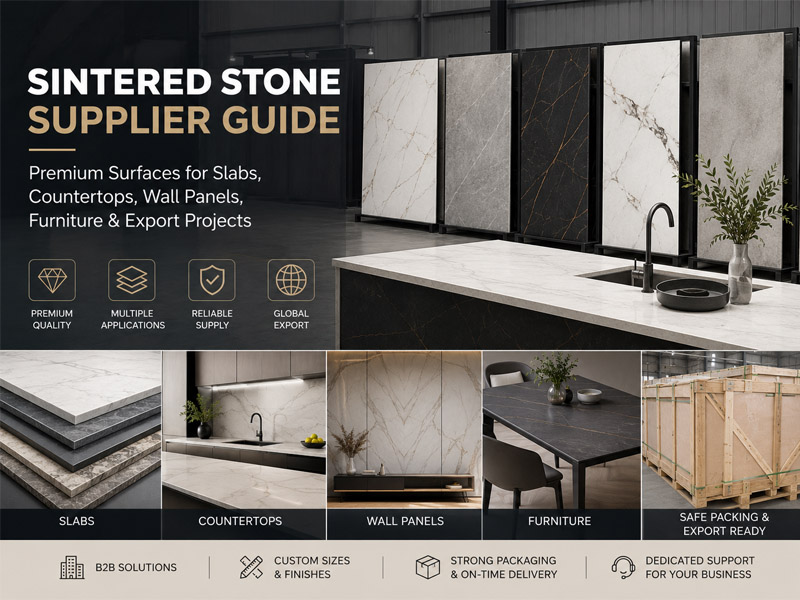
Guía de proveedores de piedra sinterizada para losas, encimeras, paneles de pared, muebles y proyectos de exportación.
Esta guía está dirigida a importadores, distribuidores, fabricantes de encimeras, estudios de cocinas, contratistas, compradores de proyectos hoteleros, fábricas de muebles, marcas de gabinetes, arquitectos y especificadores comerciales. Muchos de estos compradores ya trabajan con cuarzo, granito, mármol, losas de porcelana, baldosas cerámicas, superficies sólidas, vidrio, paneles HPL o MDF.
La piedra sinterizada resulta atractiva para quienes buscan una superficie que combine un diseño de gran formato, baja absorción de agua, resistencia al calor y a las manchas, y una estética moderna que imita la piedra. Sin embargo, elegir un proveedor es diferente a comprar losas o baldosas tradicionales. El proveedor debe comprender no solo el material, sino también su aplicación.
Para una introducción básica, lea nuestra guía sobre ¿Qué es la piedra sinterizada? Para comparar los formatos y acabados disponibles, consulte nuestro catálogo. Colección de losas de piedra sinterizada .
| Solicitud | Sustitución de materiales maduros | ¿Por qué los compradores consideran la piedra sinterizada? |
|---|---|---|
| encimeras de cocina | Cuarzo, granito, mármol, superficie sólida | Resistencia al calor, baja absorción, diseño con aspecto de piedra. |
| Paredes del baño y paneles de ducha | Azulejos cerámicos, losas de porcelana, mármol | Formato grande, menos uniones, limpieza más fácil. |
| Revestimiento de paredes y paredes decorativas | Losas de porcelana, baldosas cerámicas, piedra natural | Continuidad de diseño, efecto premium |
| Tableros de mesa y muebles | Mármol, vidrio, losas cerámicas, HPL, MDF | Resistencia a las manchas, resistencia al calor, tamaños personalizados |
| Mostradores comerciales | Cuarzo, superficie sólida, granito | Durabilidad, bajo mantenimiento, apariencia de alta gama. |
La piedra sinterizada puede sustituir al cuarzo en muchos proyectos de encimeras, pero no debe tratarse como tal durante su fabricación. La piedra sinterizada es densa, dura y muy resistente en su superficie. Sin embargo, al no depender de un aglutinante de resina como el cuarzo, puede ser más frágil en bordes, esquinas y zonas de corte si no se procesa correctamente.
Un proveedor cualificado debe comprender la fabricación de encimeras de piedra sinterizada, no solo el comercio de losas. Pregunte si ofrecen soporte o asesoramiento para la fabricación con discos de diamante, corte CNC, corte por chorro de agua, recortes para fregaderos, recortes para placas de cocina, orificios para grifos, bordes pulidos, bordes a inglete e islas tipo cascada.
No evalúe al proveedor únicamente con pequeñas muestras de color. Para proyectos de encimeras, solicite muestras de cantos, muestras de cortes y muestras de cantos a inglete. Estas muestras revelan si la losa se astilla con facilidad, si el color del cuerpo es aceptable en el canto y si el proveedor comprende los riesgos reales de las encimeras.
La elección del grosor también es fundamental. Para encimeras de piedra sinterizada, las losas de 12 mm o más gruesas suelen ser más seguras para superficies de trabajo funcionales. Si el comprador insiste en losas de 9 mm o más delgadas, el proveedor debe proporcionar un sistema de soporte claro, como un respaldo de nido de abeja de aluminio, un tablero reforzado, una base de piedra o un soporte de granito. Un proveedor que recomienda losas delgadas para encimeras sin mencionar el refuerzo, el radio de las esquinas internas, el soporte de voladizos o el control de astillamiento de los bordes puede generar riesgos de instalación y posventa.
El tamaño y el grosor de las losas son dos factores importantes que afectan el precio de la piedra sinterizada. Para la selección de tamaño, consulte nuestra Blog sobre tamaños de losas de piedra sinterizada Para comprender los niveles de costos generales, compare la especificación con nuestra guía de precios de piedra sinterizada .
Pasar de las losas de porcelana o las baldosas cerámicas a la piedra sinterizada no solo supone una mejora del material, sino que también cambia el ámbito de aplicación, el método de procesamiento y los requisitos de los proveedores.
Las losas de porcelana se utilizan comúnmente para paredes, suelos y revestimientos decorativos. La piedra sinterizada también se puede usar para estas áreas, pero su uso se extiende a encimeras, muebles, lavabos, lavamanos integrados, mostradores comerciales y otras superficies fabricadas. Esto significa que un proveedor con experiencia únicamente en la venta de paneles cerámicos de gran formato podría no ser suficiente.
Los compradores deben verificar la estructura del cuerpo, el aspecto de los bordes, los datos técnicos y la capacidad de procesamiento. Solicite fotos de los bordes cortados, muestras laterales, losas físicas e informes de pruebas. Compruebe si el proveedor puede explicar la diferencia entre losas con impresión superficial, opciones de impresión integral y efectos visuales en toda la pieza. Esto es importante para bordes visibles, escaleras, tableros de mesa, esquinas a inglete e islas de cascada.
No se fíe únicamente de nombres de productos como "losa de porcelana grande" o "piedra sinterizada". Solicite pruebas mediante muestras, vistas laterales, bordes cortados y datos de rendimiento. Para la comparación de materiales, lea piedra sinterizada frente a porcelana Para aplicaciones verticales, compare paneles de pared de piedra sinterizada .
| Punto de control | Proveedor de losas de porcelana | Proveedor de piedra sinterizada |
|---|---|---|
| Papel principal | Decoración de paredes y suelos | Decoración + fabricación funcional |
| Tratamiento | Corte y alicatado | Corte, perforación, perfilado, ingleteado |
| Aplicaciones | Instalación plana | Encimeras, paredes, muebles, lavabos |
| Requisito del proveedor | Suministro de azulejos | Producción de losas + soporte del proyecto |
El valor de la piedra sinterizada no reside únicamente en la losa en sí, sino en su potencial tras el procesamiento. Un buen proveedor debe ofrecer servicios de corte a medida, pulido de cantos, perforación, aperturas para fregaderos y placas de cocina, cantos a inglete, detalles de cascada, planificación de vetas simétricas, paneles para muebles, planos de taller, planos de procesamiento y optimización de la distribución.
Esto es importante porque los distintos compradores B2B necesitan resultados diferentes. Un fabricante de encimeras necesita instrucciones precisas para el corte y el acabado de los bordes. Una fábrica de muebles requiere tamaños repetibles y consistencia en los lotes. Un contratista de hoteles puede necesitar paneles de pared, encimeras de baño y mostradores comerciales de un mismo programa de materiales.
Si un proveedor solo puede vender losas completas pero no puede explicar el riesgo de fabricación, puede ser adecuado para revestimientos de paredes básicos, pero no para encimeras de piedra sinterizada, paneles de pared de piedra sinterizada, lavabos integrados, muebles o proyectos comerciales de alta gama. La capacidad de procesamiento profundo también afecta el costo, por lo que debe considerarse junto con su guía de precios de piedra sinterizada .
No evalúe a un proveedor de piedra sinterizada basándose únicamente en las fotos del catálogo. Las muestras y los datos de las pruebas son esenciales, especialmente para proyectos B2B, pedidos de exportación y aplicaciones que sustituyen materiales ya consolidados.
Los datos técnicos que se pueden solicitar incluyen la absorción de agua, la dureza Mohs, la resistencia a la flexión, la resistencia al impacto, la resistencia al calor, la resistencia a las manchas, la resistencia a los rayos UV, la resistencia a la abrasión, la resistencia al deslizamiento para suelos, la clasificación de resistencia al fuego para paneles de pared y los documentos CE, ISO, ASTM o EN cuando sea necesario.
Las pruebas de muestras deben ir más allá del color. Solicite una muestra de la superficie, una muestra del borde cortado, una muestra del espesor y una muestra del acabado. Para losas delgadas, compruebe la resistencia a la flexión y al impacto. Para encimeras, solicite los resultados de las pruebas de astillado del borde después del corte, muestras de bordes biselados para islas con cascada y muestras del recorte del fregadero. Para proyectos grandes, compare la uniformidad del color entre lotes antes de confirmar la producción en masa.
Una pequeña muestra puede mostrar el color, pero no puede mostrar cómo se comporta el material durante el corte, la perforación, el perfilado o la instalación.
El embalaje es una capacidad del proveedor, no un servicio menor. La piedra sinterizada de gran formato suele ser grande, delgada y difícil de manipular. Un embalaje deficiente puede convertir un precio bajo por losa en un costo total elevado del proyecto.
Un proveedor fiable debe proporcionar embalaje en forma de A, cajas de madera reforzadas, carga vertical, protección de bordes, soporte antiflexión para planchas delgadas, embalaje a prueba de humedad, fotos de la carga, planos de carga de contenedores, documentos de exportación y una política clara de gestión de roturas.
Esto es especialmente importante para compradores internacionales, proyectos hoteleros, envíos en contenedores y pedidos mixtos que incluyan losas, paneles de pared y tableros de mesa. Un proveedor profesional de piedra sinterizada debe ayudar a minimizar los daños durante el envío, además de ofrecer un precio unitario bajo. El embalaje, la política de reemplazo y el riesgo logístico también deben considerarse en su presupuesto.
Tenga cuidado si un proveedor:
Estas señales de advertencia son importantes porque la piedra sinterizada no es solo un panel decorativo. Se utiliza con frecuencia como superficie funcional para encimeras, muebles, paredes, baños e interiores comerciales. Si el proveedor desconoce los riesgos de la aplicación, el comprador puede sufrir roturas, retrasos en la instalación, un acabado deficiente en los bordes o mayores costes de posventa.
Es fundamental seleccionar un buen proveedor de piedra sinterizada según la aplicación. Si el proyecto reemplaza encimeras de cuarzo, el conocimiento de la fabricación, el procesamiento de los bordes y los sistemas de soporte son cruciales. Si reemplaza losas de porcelana o baldosas cerámicas, los compradores deben verificar las propiedades reales de la piedra sinterizada y su capacidad de procesamiento avanzado. Si el material se utiliza para muebles, paneles de pared o interiores comerciales, el servicio de corte a medida, la uniformidad del lote, el embalaje seguro y el apoyo a la exportación cobran gran importancia.
Elija la piedra sinterizada según la aplicación, el grosor, el acabado y la capacidad del proveedor. Para encimeras, se suelen recomendar losas de 12 mm o más de grosor. Para paneles de pared y superficies de muebles, pueden ser adecuadas losas más delgadas. Siempre revise las muestras, los datos técnicos, el soporte de fabricación y el embalaje antes de realizar pedidos al por mayor.
Ventajas:
Desventajas:
Para reducir el riesgo de astillamiento:
No. La piedra sinterizada es muy duradera y ofrece una excelente resistencia a la flexión. Sin embargo, al igual que la piedra natural y la porcelana, puede agrietarse si se manipula incorrectamente, se instala sin el soporte adecuado o se somete a impactos concentrados en bordes y esquinas. Una fabricación e instalación correctas son esenciales.
Depende de la aplicación. La piedra sinterizada ofrece mayor resistencia al calor y a los rayos UV, además de menor absorción de agua, lo que la hace adecuada para uso en exteriores y superficies de alto rendimiento. El cuarzo suele ser más fácil de fabricar y puede ofrecer una gama más amplia de colores y diseños.
Para proyectos que requieren durabilidad en exteriores, resistencia al calor directo y superficies de gran formato, se suele preferir la piedra sinterizada. Para encimeras de interior estándar con requisitos de fabricación más sencillos, el cuarzo sigue siendo una opción popular.
párrafo CTAContáctanos Para especificaciones de losas, muestras, instrucciones de corte, asesoramiento sobre embalaje y ayuda con las cotizaciones de exportación.
Categorías
Nuevo blog
Etiquetas
 ROOM 205,NO.45, MIDDLE HAIJING ROAD,XIAMEN,AREA OF PILOT FREE TRADE ZONE(FUJIAN)OF CHINA
Para Consultas sobre nuestros productos o su lista de precios, por favor, déjanos a nosotros y estaremos en contacto dentro de las 24 horas.



© Derechos de autor: 2026 XIAMEN EXCELLENT STONE CO.,LTD. Reservados todos los derechos.

Red IPv6 admitida